
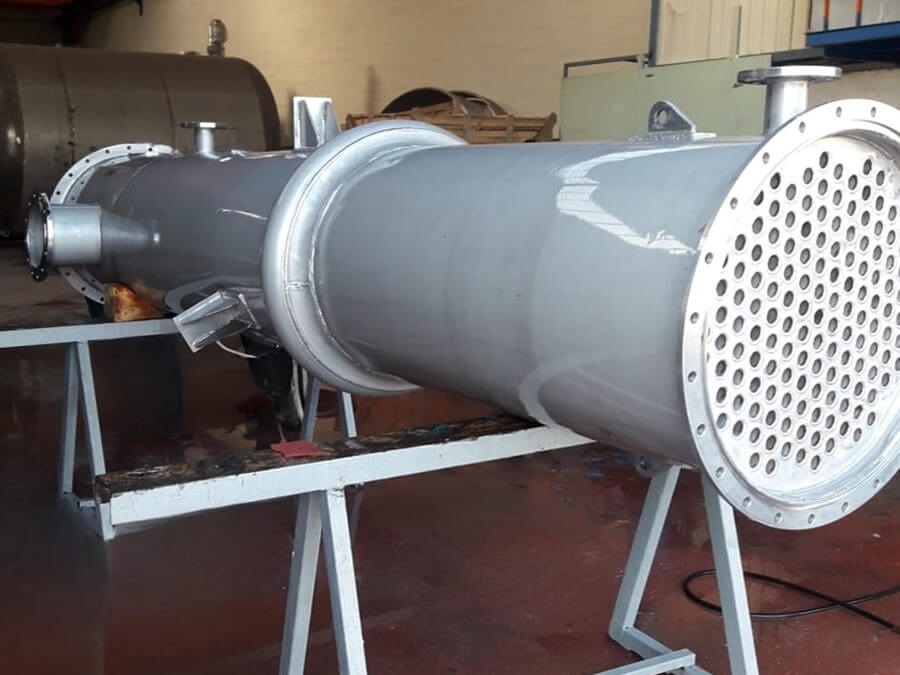
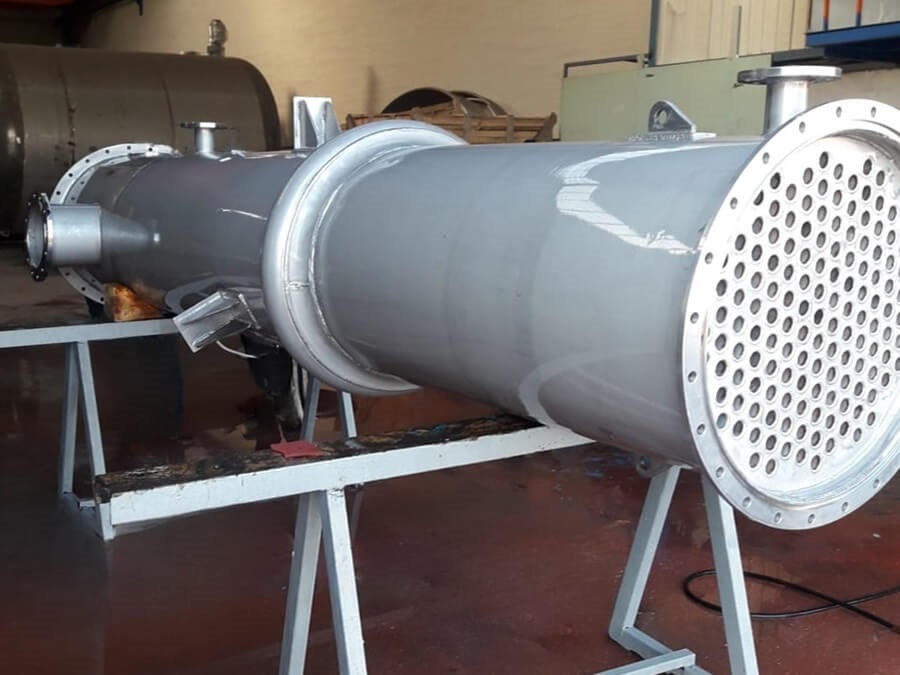
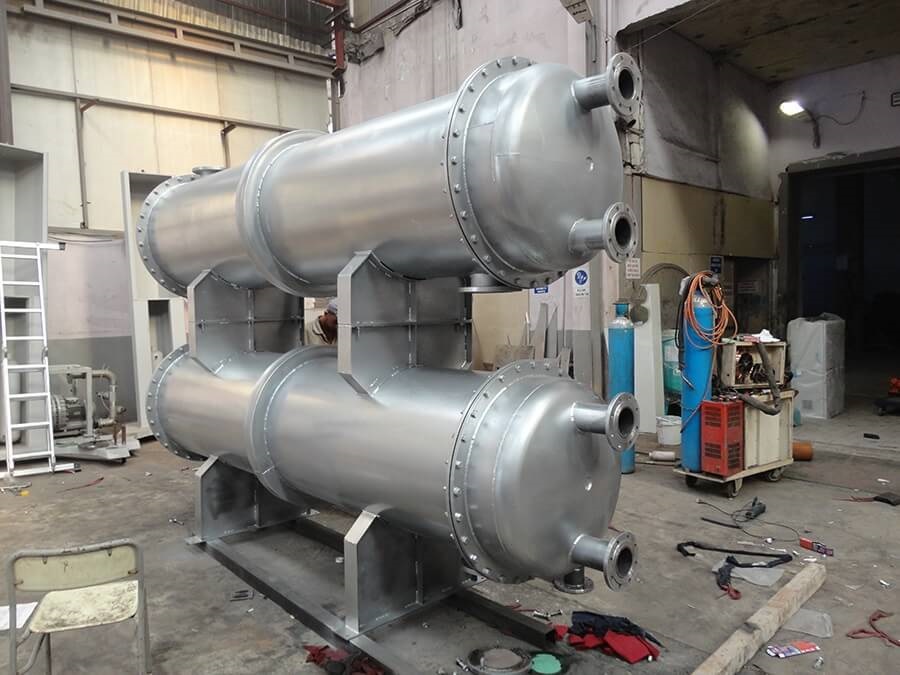
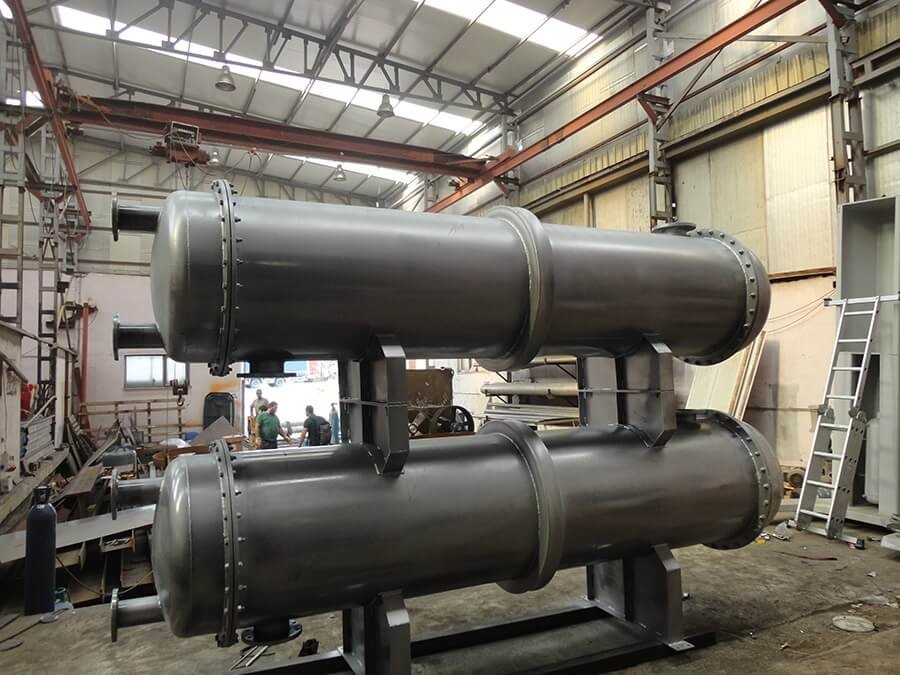
Tubular Heat Exchanger
Industrial heat exchanger systems that manage heat transfer reliably and in a controlled manner.
What Is a Tubular Heat Exchanger?
Description
A tubular heat exchanger is an industrial device used to transfer heat. Exchanging heat between two different fluids, it generally consists of tubes arranged within one another. A tubular heat exchanger transfers heat from one medium to another. These exchangers are widely used in processes such as heating, cooling and evaporation. Providing energy efficiency and reducing costs, tubular heat exchangers are indispensable equipment in industrial facilities.
How Does a Tubular Heat Exchanger Work?
Tubular heat exchangers transfer heat between two different fluids, generally a liquid and a gas, flowing independently of one another. Hot fluid passes through one of the nested tubes and cold fluid through the other. Heat is transferred without the fluids mixing. The hot fluid transfers heat through the tube’s outer surface, causing the cold fluid to warm. For efficient operation, fluid velocities, contact times with tube surfaces and the fluids’ physical properties must be optimized. Click to read the article explaining how our reactor product operates.
Tubular Heat Exchanger Features
Tubular heat exchanger designs have several important features:
- High Heat-Transfer Efficiency: Tubular heat exchangers are systems capable of transferring heat with high efficiency.
- Flexibility: They allow hot and cold fluids to flow at different velocities.
- Compact Design: Their generally compact structures allow use in limited spaces.
- Durability: They can be manufactured from various materials, making them durable solutions in many industrial environments.
- Easy Cleaning and Maintenance: Their tube structure allows cleaning and maintenance to be performed easily.
Advantages of Tubular Heat Exchangers
Using tubular heat exchangers brings many advantages, including:
- Efficient Heat Transfer: Temperature differences enable efficient heat transfer, resulting in energy savings.
- Long Service Life: Their durable structures allow trouble-free use for many years.
- Flexibility: The ability to operate with different fluids and under different conditions makes tubular heat exchangers suitable for a wide range of industrial applications.
- Low Maintenance Costs: Simple structures and easy maintenance requirements reduce operating costs.
Components of a Tubular Heat Exchanger
Tubular heat exchangers consist of the following main components:
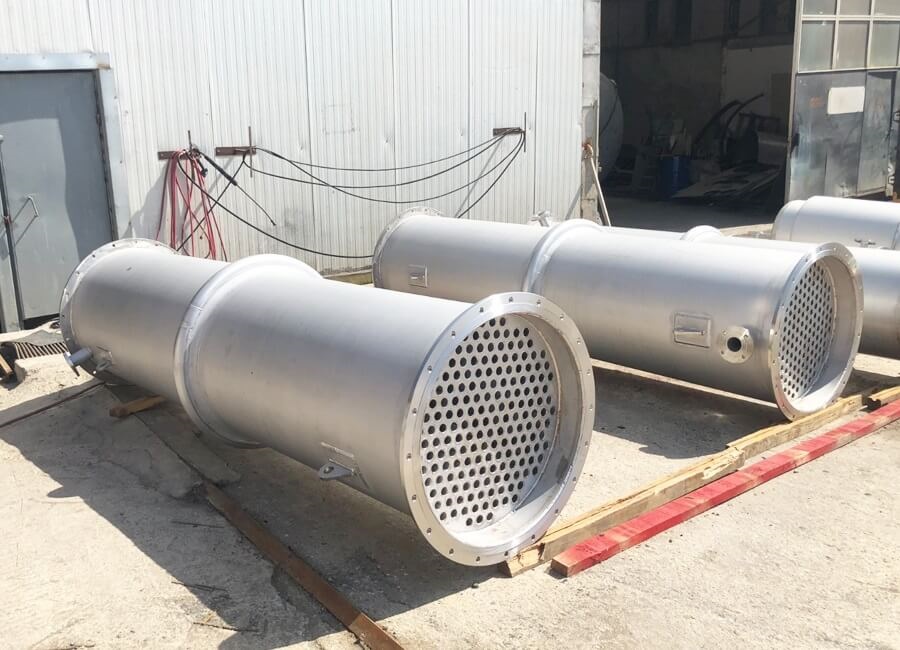
- Tube Bundle: The main structural element that performs heat transfer. The tubes are the channels through which fluid passes.
- Heads: Connection elements at the tube ends where fluids enter and exit.
- Tube Sheets: Generally metal plates that hold the tube bundles in place.
- Heat-Transfer Surface: The surface area of the tubes determines heat-transfer efficiency. A larger surface area increases heat-transfer capacity.
- Connection Elements: They connect tube bundles and provide fluid inlets and outlets.
Where Are Tubular Heat Exchangers Used?
Tubular heat exchangers are used in a wide variety of industrial fields, including:
- Oil and Gas Industry: Widely used in processes such as crude oil processing and gas cooling.
- Chemical and Petrochemical Industry: Tubular heat exchangers play a critical role in heat transfer during chemical manufacturing and processing.
- Food and Beverage Industry: Used for thermal processing and cooling in food processing facilities.
- Energy Sector: Effectively used for heat transfer in power plants and nuclear facilities.
Heating and Cooling Systems: Tubular heat exchangers are also widely selected for heating and cooling systems. You can access our article on the applications of our filling machine product here.
How Is a Tubular Heat Exchanger Calculated?
A tubular heat exchanger calculation determines heat-transfer capacity. The basic parameters used are:
- Heat-Transfer Coefficient (U): Indicates the material’s ability to transfer heat.
- Surface Area (A): The total tube surface area determines how effective heat transfer is.
- Temperature Difference (ΔT): The temperature difference between the fluids determines the amount of heat transfer.
The calculation formula is generally expressed as:
Q=U×A×ΔTQ = U \times A \times \Delta TQ=U×A×ΔT
Here, Q represents heat transfer. Fluid properties and operating conditions are taken into account during calculation.
Tubular Heat Exchanger Manufacturing
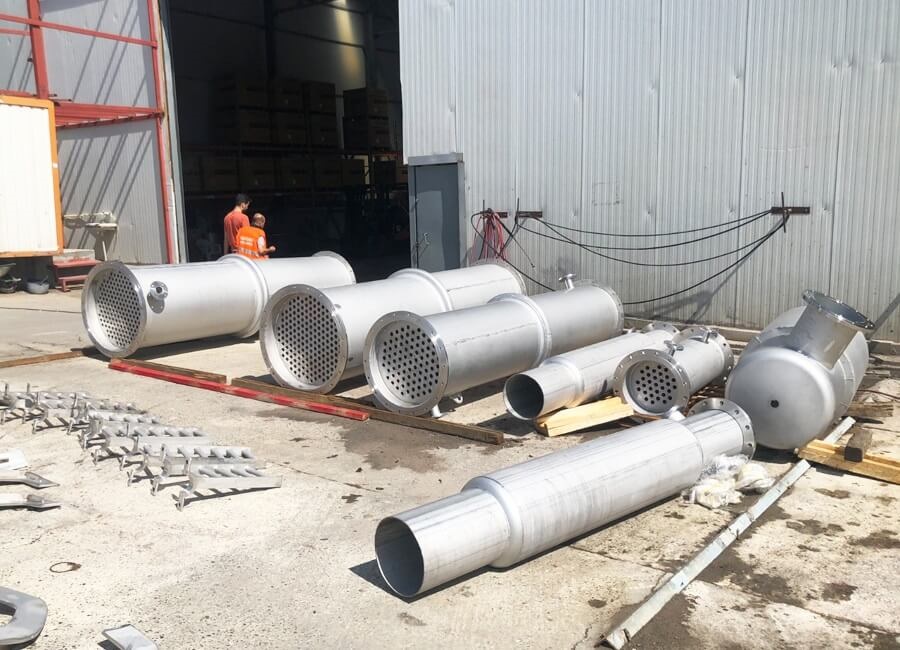
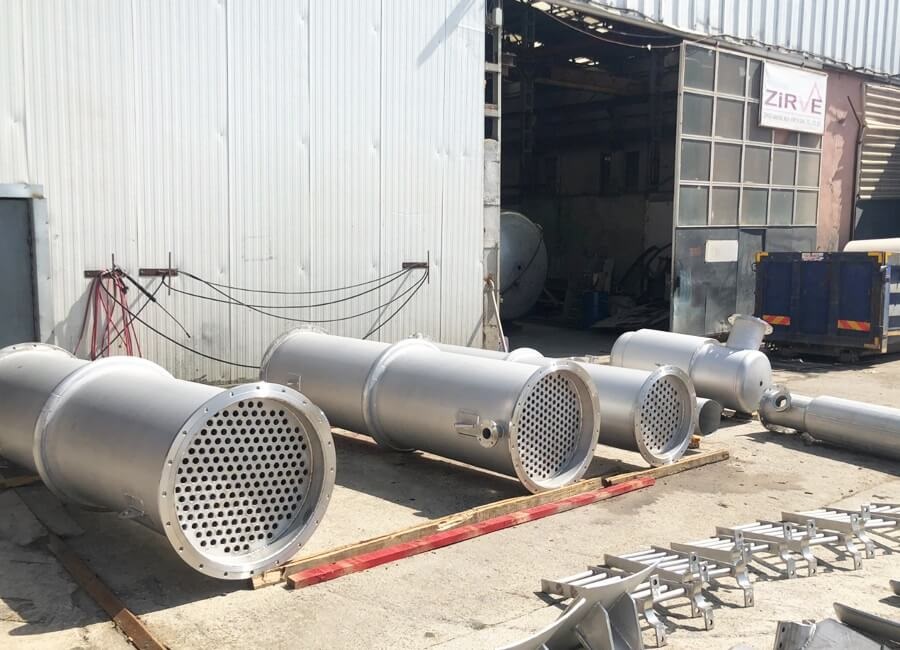
Tubular heat exchanger manufacturing requires specialized designs and high-quality materials. This process ensures correct assembly of tubes and other components and optimization of heat-transfer capacity. The most important manufacturing considerations are material selection, tube design, connection elements and heat-transfer surface efficiency. Manufacturing is generally customized to customer requirements, and the final product is produced to meet specific industrial needs.
Tubular Heat Exchanger Prices
Tubular heat exchanger prices vary according to materials, dimensions and custom design requirements. Pricing also reflects manufacturing time, quality control and special requests during production. Customizable to customer needs, tubular heat exchangers are offered at different price levels. Factors such as efficiency, durability and energy savings are particularly considered when determining prices. Visit our page for information about reactor prices.
Tubular heat exchangers provide important technology for highly efficient heat transfer. Manufacturing processes, design details and applications increase their importance in industrial processes. Prices vary according to quality and customization options.
Tubular Heat Exchanger Manufacturing
Tubular Heat Exchanger Manufacturing
What is tubular heat exchanger manufacturing? Heat exchangers used in the production of high-temperature fluids establish high efficiency and orderly operation through quality industrial production processes. You should consider Zirve Proses Makine’s advantages in first-class material selection, quality production planning and company-specific design as an opportunity for your business. We provide quality manufacturing together with appropriate assembly and installation for all companies prioritizing product quality and high efficiency. Thanks to our successful work in tubular heat exchanger manufacturing:
- You can obtain a more economical, practical product compared with plate heat exchangers.
- You can obtain a model with a practical design that is easier to manufacture.
- You will have a model resistant to high pressure.
- You will be less likely to encounter pressure-drop problems.
- Your system will not become dirty easily and will be easier to clean.
- Installation will be much easier.
Plate heat exchangers also have their own advantages. They are known to be preferred for factors such as efficiency, tube replacement and increased cooling capacity. Successfully manufacturing tubular heat exchangers, our company continually renews and advances its technology. Design variety, production tailored to requirements and selective material sourcing demonstrate the Zirve Proses Makine difference. For production processes based on heat, our products manufactured with discipline have provided industrial advantages to many companies.
The materials used in tubular heat exchanger manufacturing resist vacuum, pressure, impact and corrosion. Appropriate design and manufacturing work must also be added to these qualities.
Through our installation and assembly services, you can immediately begin using these technological products. We select materials resistant to 0–16 bar pressure to prevent damage during operation. Our 1-, 2- and 4-pass design alternatives give the products a broad range of functionality. Products ranging from 1 to 750 square meters are manufactured according to your order.
Expansion joints prevent expansion and contraction related to temperature levels. Tubes are welded using orbital welding machines to create a robust structure. Our products with very long service lives are offered to customers within a guaranteed service period.
Liquid and gaseous fluids can be heated and processed without coming into contact with each other. Our products deliver very positive results in fields including:
- Refineries
- Petrochemicals
- Treatment
- Ship flue gases
- Textiles
- Pharmaceuticals
- Steam cooling
Tube and system dimensions and diameters can be adjusted according to the application. To obtain this technology, suitable for horizontal and vertical use, simply share your project or desired product with us. Zirve Proses Makine engineers will then undertake design and manufacturing work suited to your requirements. With manufacturing to national and international standards, we are ready to meet your needs and manufacture and install the product you require. You can click if you have questions about Dissolvers and Dispensers.